
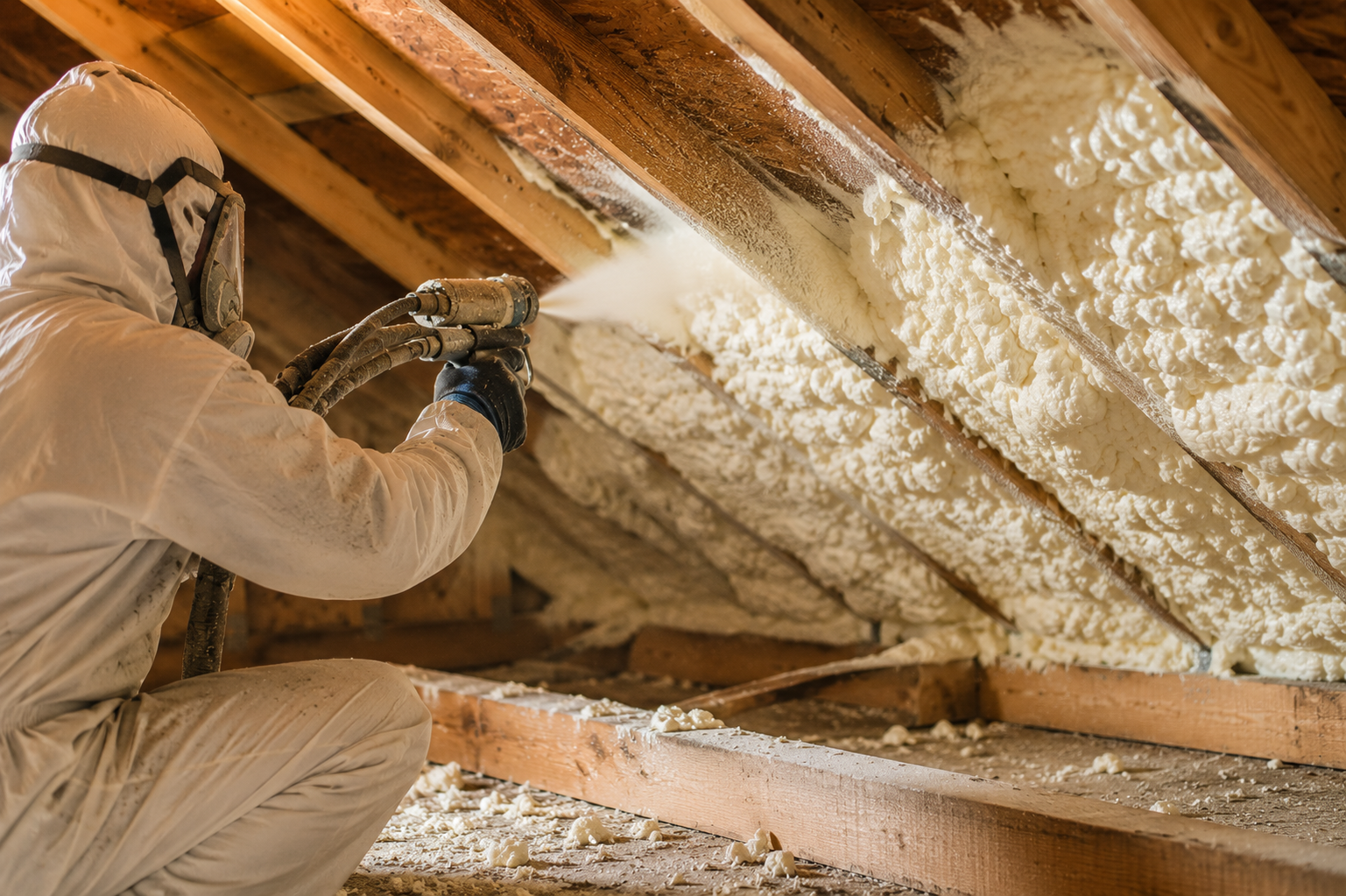
No two spaces are exactly alike—and neither are their insulation needs. From traditional fiberglass to high-performance spray foam and air sealing, our team offers a range of solutions designed to improve comfort, efficiency, and overall building performance.
Not sure which option is right for your project? Our Certified Energy Experts can help you find the best solution for your space, goals, and budget.
The Right Insulation Makes All the Difference.
INSULATION SOLUTIONS
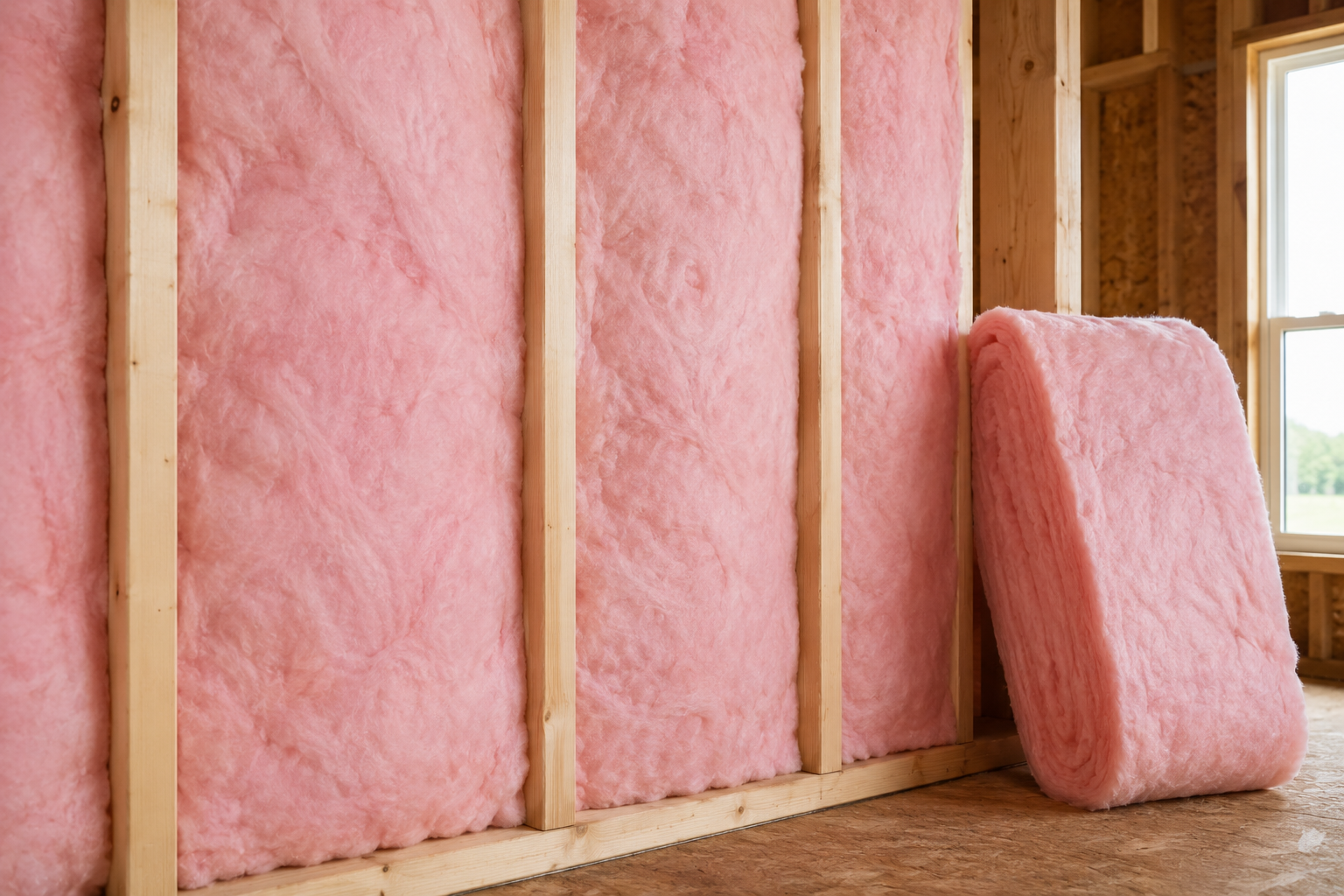
Fiberglass BattING Insulation
• $ COST-EFFECTIVE
• VERSATILE APPLICATION
• RELIABLE PERFORMANCE
A proven and cost-effective option, fiberglass batt insulation provides reliable thermal and acoustic performance for residential, commercial, new construction, and retrofit projects. Pre-cut sections are professionally installed between framing to create consistent coverage throughout walls, ceilings, and floors.
Ideal for: Walls, ceilings, floors, new construction, residential and commercial projects
Why choose fiberglass batt?
Affordable, versatile, and effective, fiberglass batt is a dependable choice when you need quality insulation without the higher investment of specialized systems.
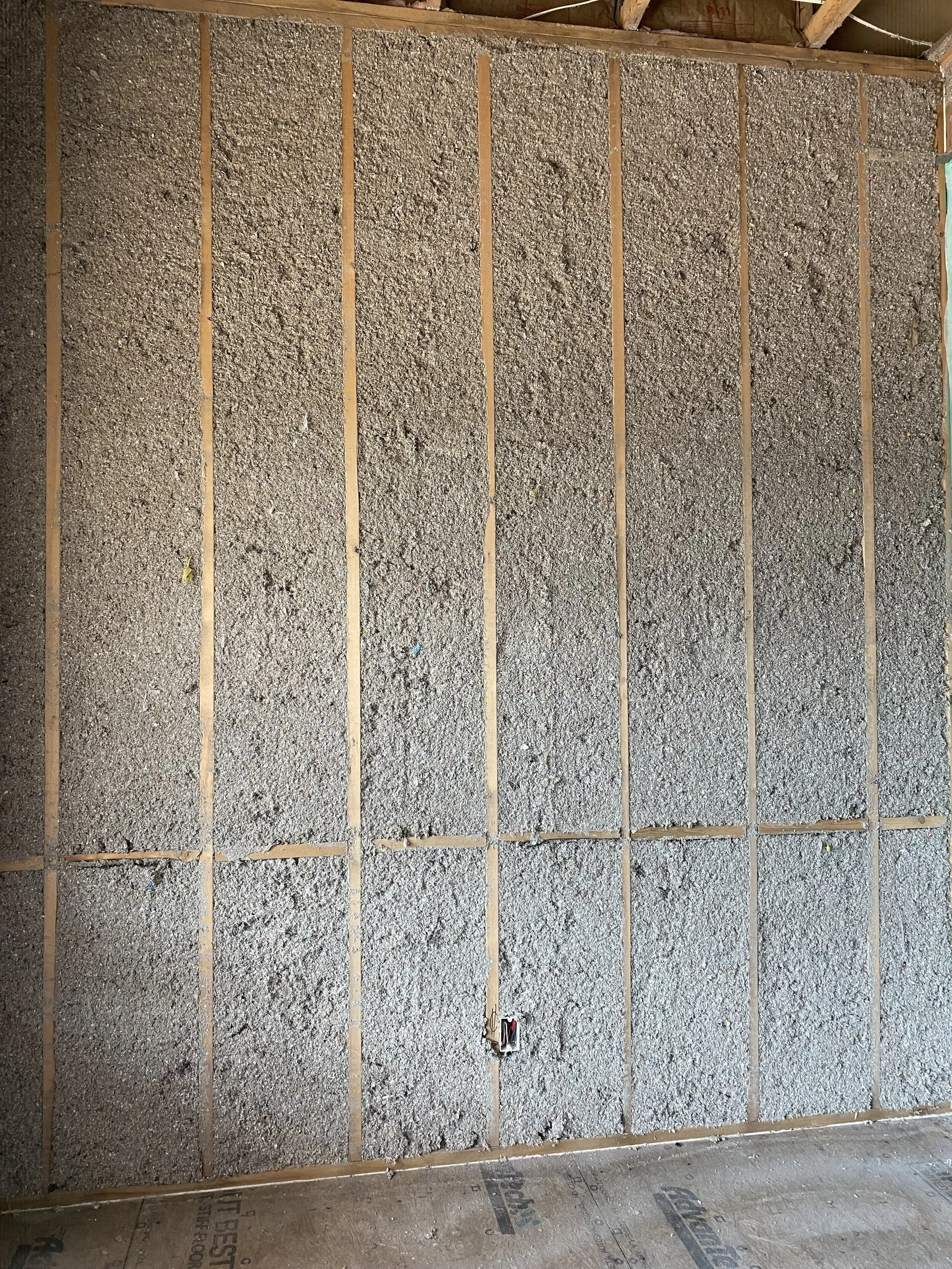
Wall Spray Cellulose
• ECO-FRIENDLY
• DENSE COVERAGE
• SOUND DAMPENING
Made primarily from recycled paper fiber, spray-applied cellulose creates a dense layer of insulation within open wall cavities. During installation, cellulose is lightly dampened so it bonds within the cavity, allowing it to fit closely around pipes, wires, and other areas where gaps can otherwise occur.
Its dense composition helps reduce air movement and outside noise while providing effective thermal performance. The material is also treated with borate minerals for added fire resistance and pest deterrence.
Ideal for: Open wall cavities, new construction, additions, and projects where dense, consistent coverage is important
Why choose spray cellulose?
Dense coverage, recycled content, sound-dampening properties, and the ability to fit around irregular spaces make cellulose a versatile insulation solution.
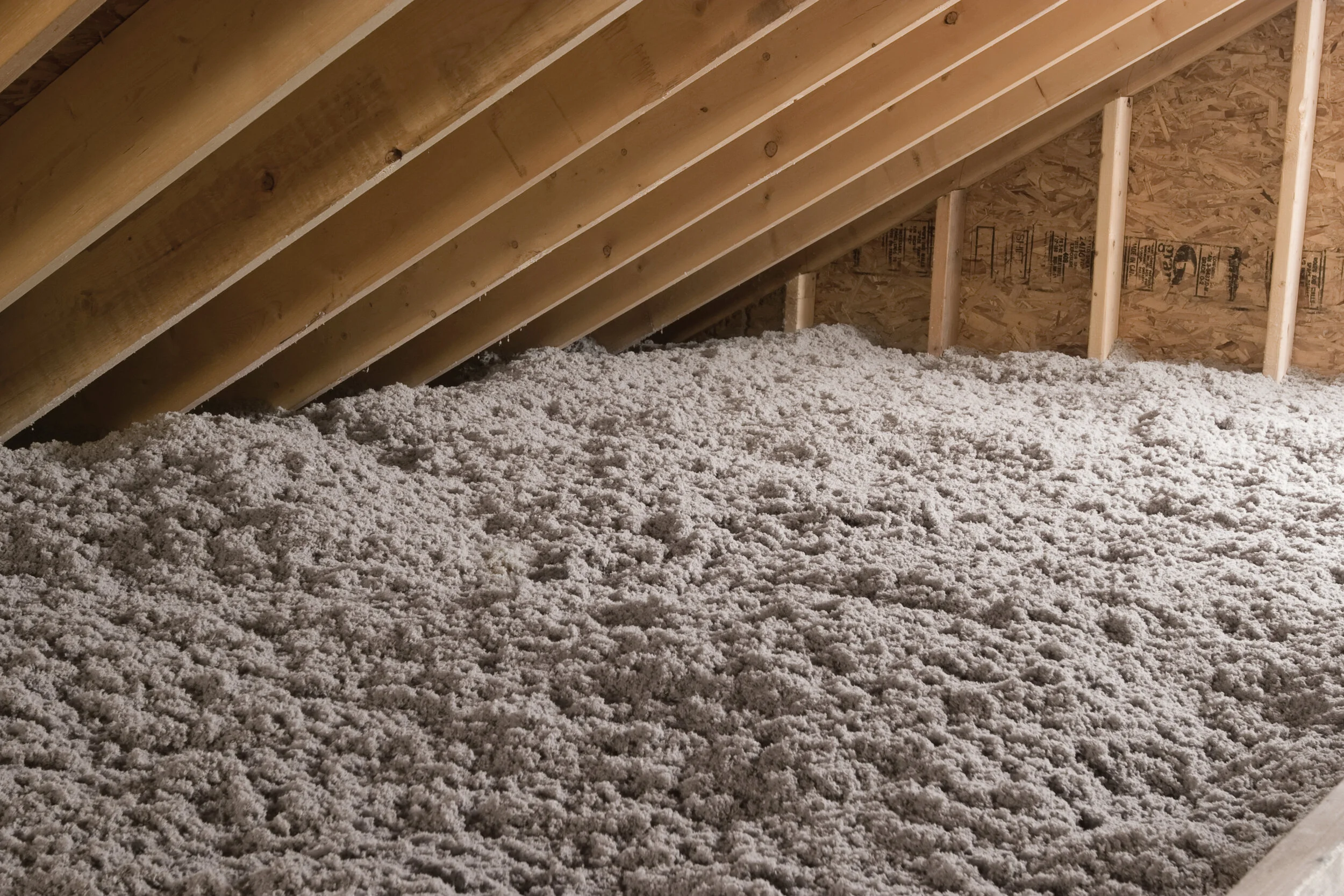
Blown Cellulose
• ECO-FRIENDLY
• GREAT FOR RETROFITS
• HARD-TO-REACH SPACES
Blown cellulose offers an effective way to add insulation to attics and retrofit existing spaces. Made primarily from recycled paper fiber, the loose-fill material is blown into place to reach the desired insulation level while filling gaps and hard-to-reach areas.
Because of its density, cellulose can be especially useful for improving the performance of existing insulation without completely rebuilding the space.
Ideal for: Attics, existing homes, retrofit wall applications, and hard-to-reach spaces
Why choose blown cellulose?
It provides dense, thorough coverage and is a practical option for improving insulation in existing homes and buildings.
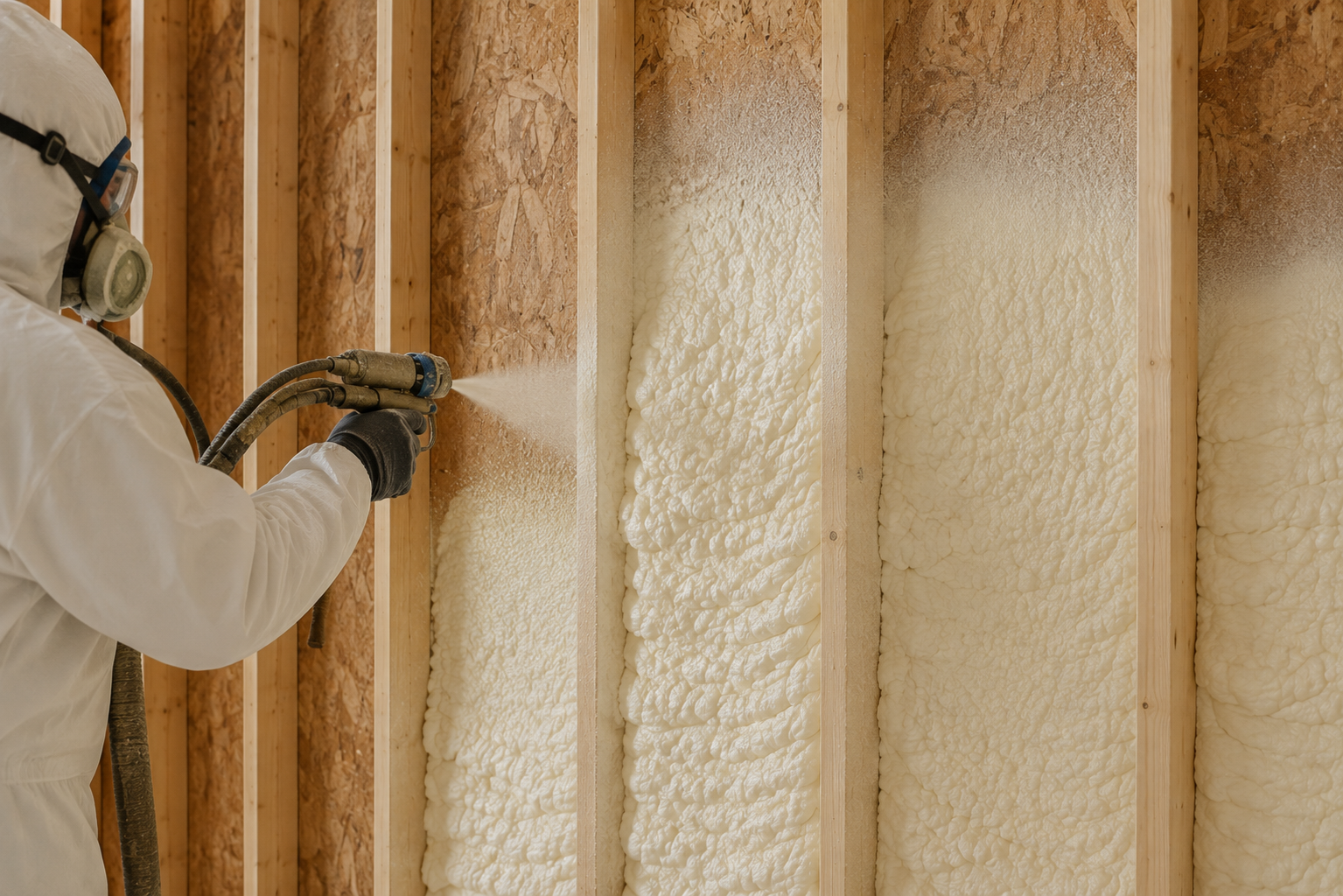
OPEN-CELL SPRAY FOAM
• EXCELLENT SOUND CONTROL
• EXPANDS TO FILL GAPS
• AIR-SEALING PERFORMANCE
Open-cell spray foam expands significantly as it’s applied, allowing it to fill gaps, cavities, and irregular spaces while creating a continuous layer of insulation and helping control air movement.
Its softer, less-dense structure also provides excellent sound absorption, making it a strong option when both comfort and noise reduction are priorities.
Ideal for: Walls, attics, cathedral ceilings, rim joists, garage ceilings, and large or irregular cavities
Why choose open-cell spray foam?
Its expansive coverage combines insulation and air control while helping reduce sound transfer between and around spaces.
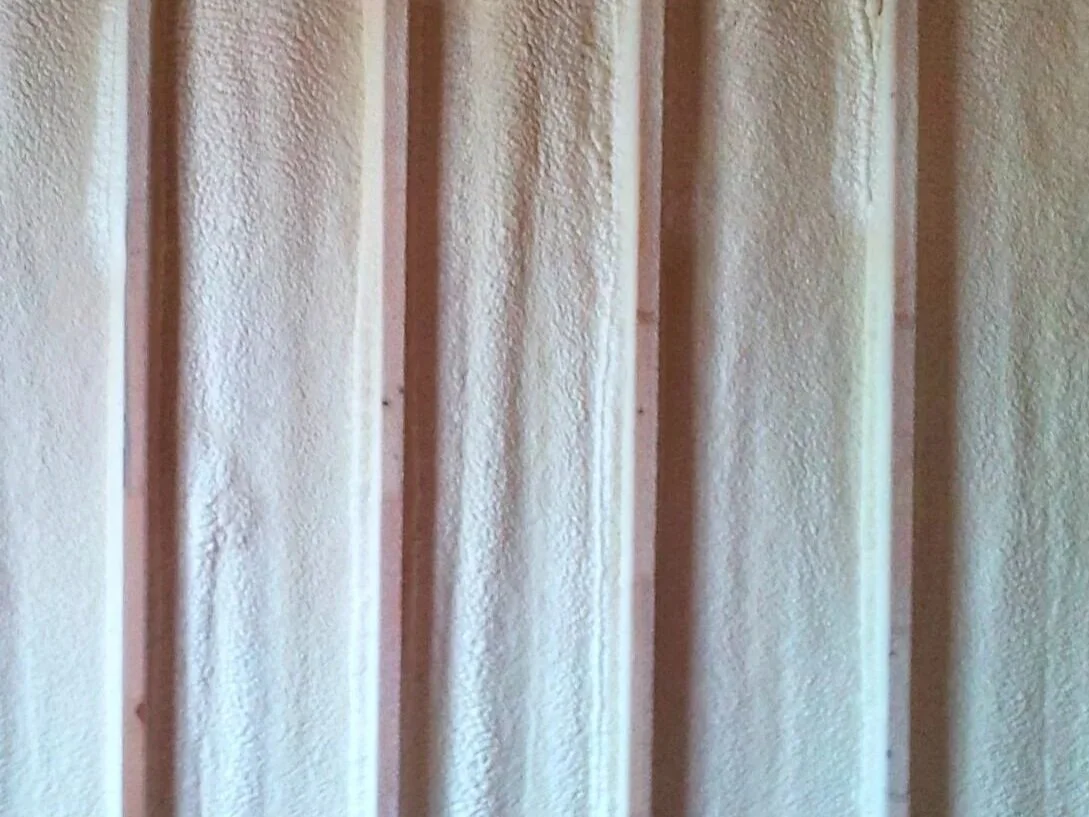
CLOSED-CELL SPRAY FOAM
• HIGH R-VALUE PER INCH
• MOISTURE RESISTANT
• HIGH-PERFORMANCE OPTION
Closed-cell spray foam is a dense, high-performance insulation that creates a seamless layer of insulation while also helping control air and moisture movement. Its high insulating value per inch makes it especially useful where space is limited or higher performance is needed.
Once cured, its rigid structure can also add strength to wall and building assemblies, making it a versatile solution for residential, commercial, and metal-building applications.
Ideal for: Exterior walls, crawlspaces, rim joists, cathedral ceilings, garages, metal buildings, and tight spaces
Why choose closed-cell spray foam?
High performance in less space, strong air-sealing capabilities, moisture resistance, and added rigidity make it one of Jordan’s most robust insulation options.

BLOWN FIBERGLASS
• $ COST-EFFECTIVE
• GREAT FOR ATTICS
• MINIMAL SETTLING
Blown fiberglass is a loose-fill insulation that can be installed across attics and other spaces to create consistent thermal coverage. It’s also a useful retrofit option for existing homes, where insulation can be added to enclosed wall cavities through a drill-and-fill process.
Unlike some loose-fill materials, fiberglass is designed to maintain its loft over time, helping provide dependable long-term performance.
Ideal for: Attics, enclosed walls, ceilings, retrofit projects, and new construction
Why choose blown fiberglass?
It’s a practical, cost-effective way to add insulation across large or difficult-to-access areas while providing reliable thermal performance.
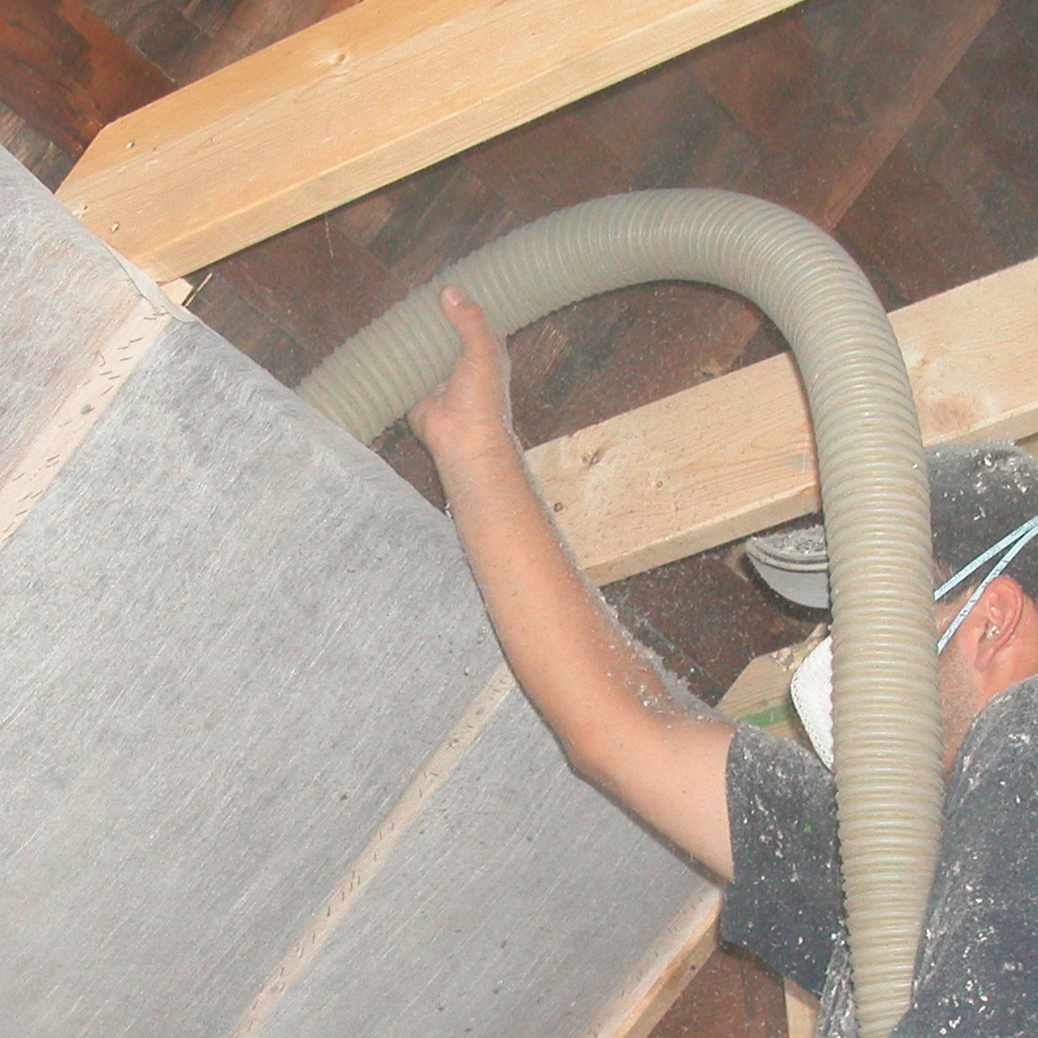
Blow-In-Blanket System (BIB)
• CUSTOM-FIT COVERAGE
• FILLS AROUND OBSTACLES
• CONSISTENT PERFORMANCE
The Blow-In-Blanket System, or BIB, uses loose fiberglass insulation installed behind a specialized fabric within open wall cavities. The insulation is blown in at a controlled density, allowing it to fill the cavity around wiring, plumbing, and other obstacles for consistent coverage.
Unlike traditional fiberglass batts, which are pre-cut to fit between framing, BIB conforms to the unique shape of each cavity for a more complete fit.
Ideal for: New construction, open wall cavities, custom homes, and residential or commercial projects
Why choose BIB?
It combines the familiar benefits of fiberglass with dense, custom-fit coverage designed to reduce gaps and provide consistent insulation throughout the wall cavity.
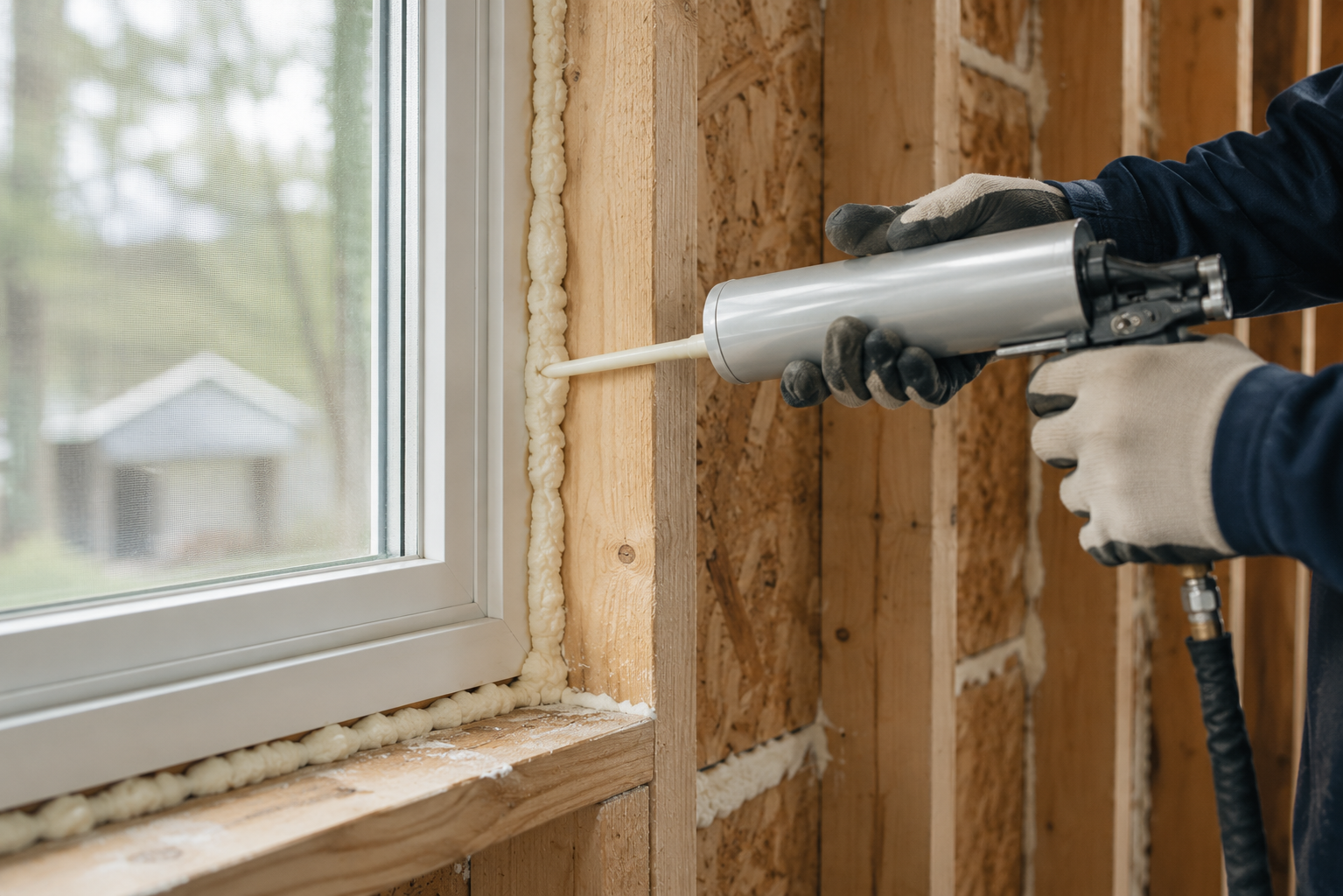
AIR SEALING
• REDUCES DRAFTS
• IMPROVES EFFICIENCY
• ENHANCES COMFORT
Insulation works best when unwanted air movement is addressed, too. Air sealing targets the gaps, cracks, penetrations, and connections throughout a building where conditioned air can escape and outside air can enter.
By identifying and sealing these areas, we can help reduce drafts, improve temperature consistency, and allow your insulation and HVAC system to perform more effectively.
Ideal for: Existing homes, new construction, attics, rim joists, penetrations, and areas experiencing drafts or inconsistent temperatures
Why choose air sealing?
Reducing uncontrolled airflow can improve comfort and energy efficiency while helping the rest of your insulation system perform the way it was designed to.
HYBRID SPRAY FOAM + CELLULOSE
• HIGH R-VALUE
• SUPERIOR AIR SEALING
• ENHANCED SOUND CONTROL
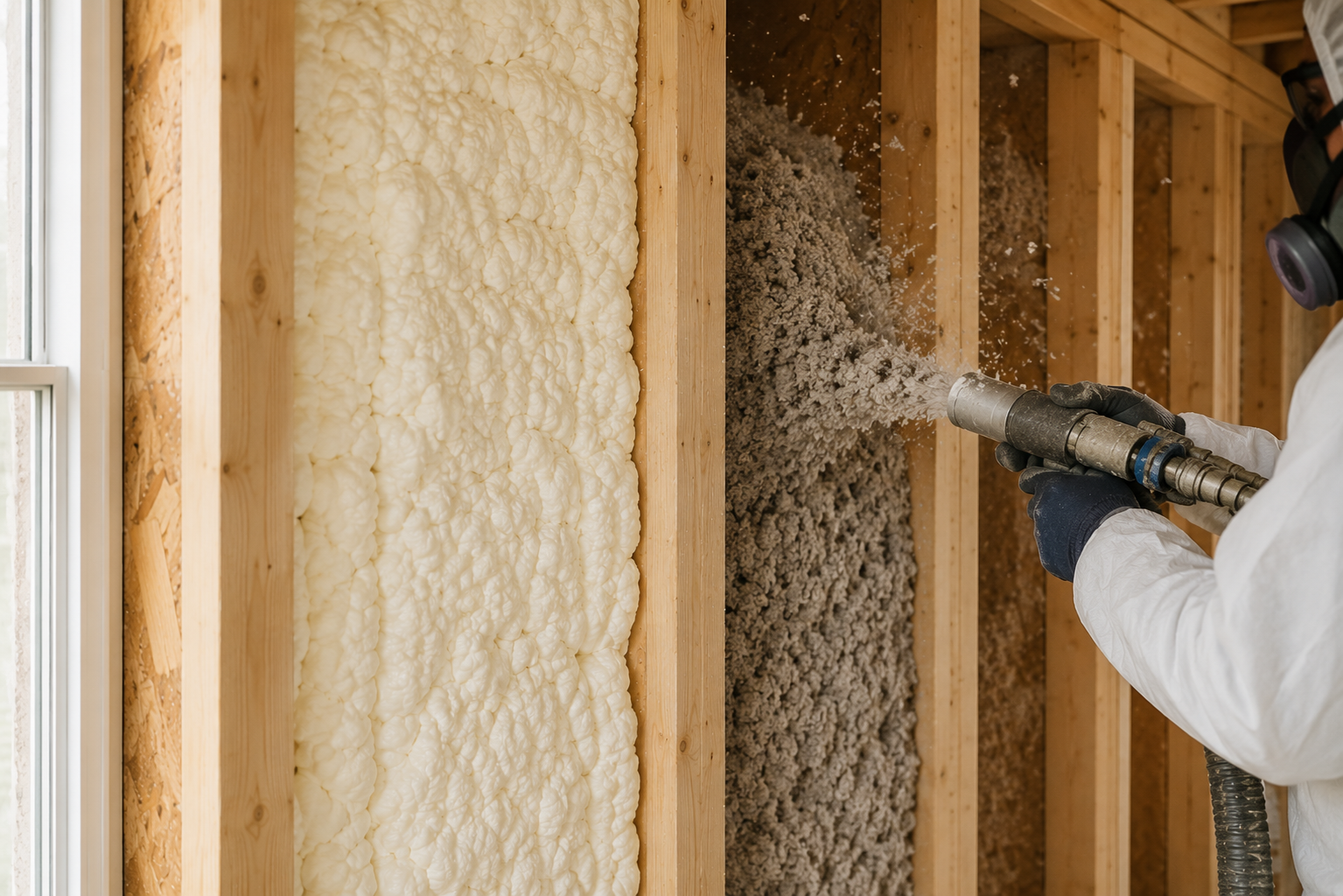
Our hybrid system combines two high-performing insulation methods to take advantage of the strengths of both. A layer of spray foam is first applied to help create an air seal within the building envelope. Once cured, spray-applied cellulose is added to complete the wall cavity with dense insulation coverage.
Together, the two materials create a high-performance wall system designed to improve comfort, efficiency, and sound control.
Ideal for: New construction, exterior walls, and projects where enhanced thermal and air-sealing performance are priorities
Why choose a hybrid system?
By pairing the air-sealing benefits of spray foam with the dense coverage of cellulose, this system provides a comprehensive approach to improving wall performance.
AGRICULTURAL INSULATION
• TEMPERATURE CONTROL
• MOISTURE & CONDENSATION CONTROL
• SOUND & ODOR REDUCTION
Built to Perform in Demanding Agricultural Environments
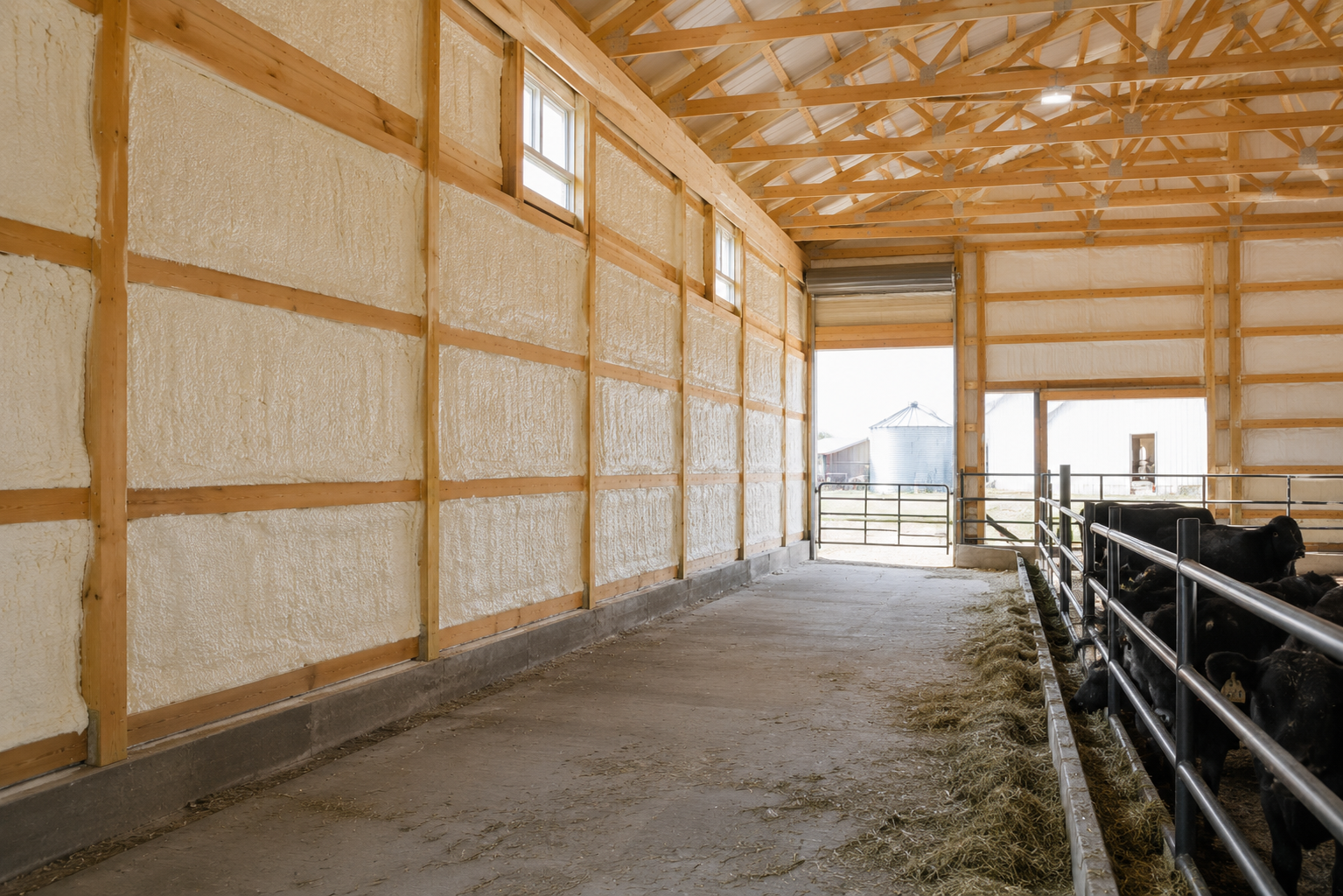
Agricultural buildings come with their own insulation challenges. Our team installs insulation solutions designed for barns, metal buildings, livestock facilities, and other agricultural structures where temperature control, condensation, moisture, sound, and durability all matter.
The right insulation can help maintain more consistent temperatures, reduce energy costs, protect equipment and other investments, and create a more comfortable environment for livestock and the people working inside.
QUESTIONS? WE'VE GOT ANSWERS.
Everything You Need to Know Before Your Project
-
The R-value is a measure of thermal resistance, specifically how well a complete wall or ceiling, resists the flow of heat. The higher the R-value, the more insulating the material is. Higher R-values can reduce heating bills in cold weather and cooling bills in hot weather.
-
The amount of insulation recommended for your home will vary depending on a number of factors. Different climates require different insulation R-values. Current standards for our area (zone 4) are currently R13 in exterior walls and R30 in the attic. We can achieve higher R-value ratings in exterior walls with applications such as damp applied cellulose, spray foam insulation and our hybrid option. If your home is more than 10 years old, you likely need more insulation. There are many ways to retrofit a home with fiberglass insulation.
-
Contact one of our Certified Energy Experts to help setermine the “best” insulation type of insulation for your project. Closed‑cell spray foam offers the highest R‑value per inch, fiberglass is the most affordable. Cellulose can be damp applied in exterior walls or blown dry in to attics, th best Eco‑Friendly & Retrofit Option. The right choice depends on climate zone, location (attic, walls, basement), budget, and whether you need air sealing, soundproofing, or moisture control.
-
Old insulation does not always need to be removed, but removal is recommended if it is damaged, contaminated, or preventing proper installation of new insulation.
-
Your home could be showing signs that your insulation may need an upgrade. Noticing temperature fluctuations in rooms, drafty walls, or increasing energy bills could be among the top reasons your home needs professional evaluation.
-
DIY insulation can save money and give you more control over your project. Clients should consider the risks if not done correctly. Anyone installing their own insulation should consider health and safety risks, performance issues, the required physical effort, and the time and effort it takes to yield good performance. Calling a professional after a DIY install can be more costly than the initial estimate.
-
Current 2026 Insulation costs range from $1.00 to $6.00 per square foot installed, with total home projects typically costing $1,200 to $6,000 depending on material, area, and installation type. Fiberglass Batts: $0.75 to $1.85 per sq. ft.; Blown-in or Loose-fill Insulation: $1.00 to $4.00 per sq. ft.; Spray Foam (Open or Closed Cell): $2.00 to $6.00 per sq. ft.